Updated 2 months ago

1971 – 2026
German trance artist.
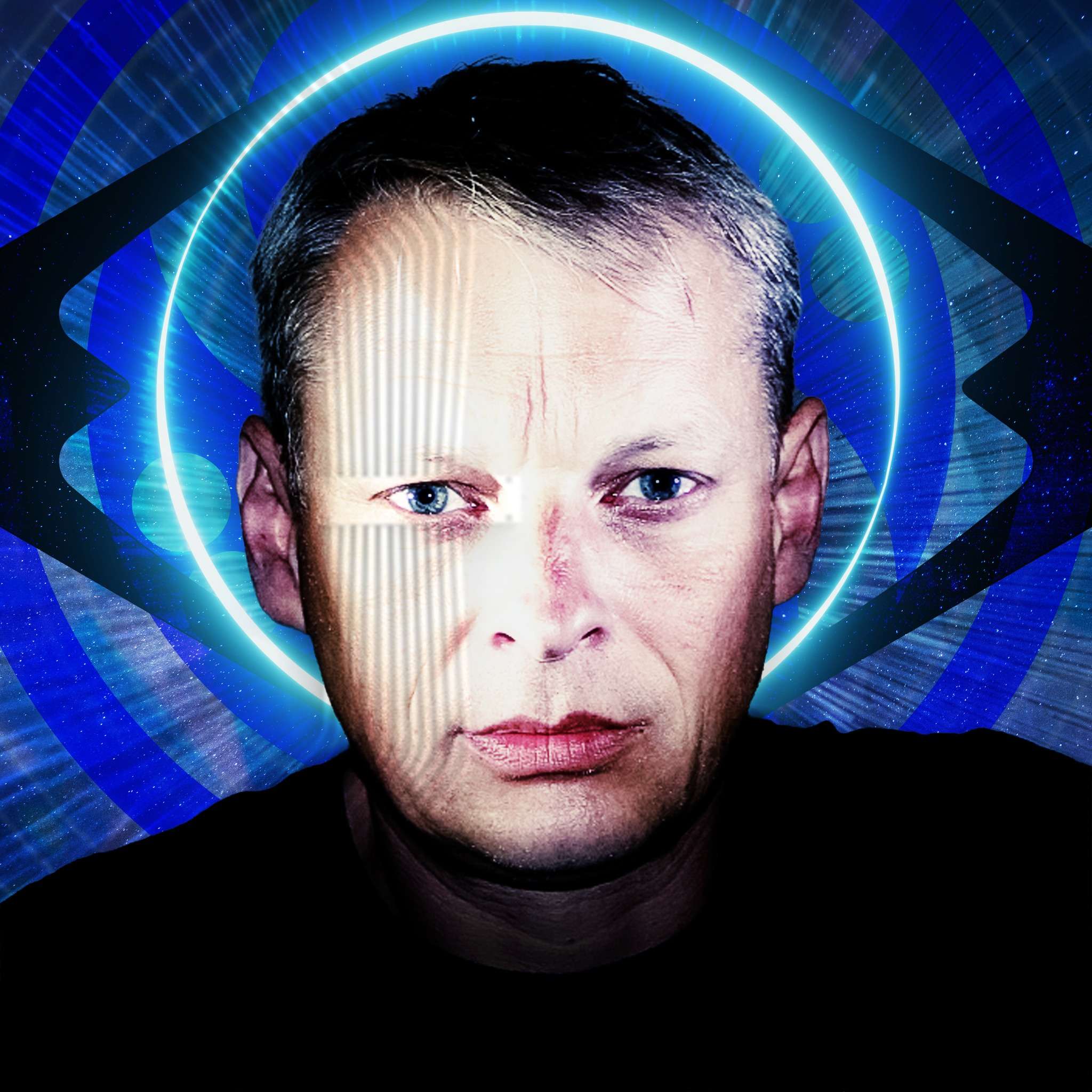
| Born in Vienna 1971. Played piano and violin for 12 years, and started making music in 1987. His first record was released in 1989 (Victim – BG The Prince Of Rap on Sony Music). Besides all his collaborations, solo projects and DJing on festivals and parties all over the world, he has also produced music for various TV shows, such as Tatort, Galileo Pro7, Vox Reisetours, Spiegel TV, Image movies for Porsche, Siemens and Deutsche Bank. Michael released music on Harthouse as Eternal Basement, and, along with Gabriel Le Mar and Petro Nikolaidis, was part of Saafi Brothers, a downtempo music project from Germany. They also produced psychedelic trance, dub and ambient music. The band has seen some success in the chill out spaces at large festivals. The name Saafi is derived from a Sanskrit word meaning “travelling musician”. Alex Azary was once a member of the band. |
He didn’t slow down.
Facebook – Soundcloud – Bandcamp
Simon Ghahary
Late Sunday afternoon in California, I found out we lost Michael Kohlbecker. I had spoken to him just a few weeks before. I’ve been sitting with it ever since, and I’m not going to pretend I’ve found the right words. But I want to try.
I found Michael before I found him — which is the only honest way to describe it. I was deep in the Harthouse catalogue in the early 1990s, collecting records, working out what this Frankfurt sound was that I couldn’t get enough of. I came across Eternal Basement’s Taking Place In You. The original version was already extraordinary. But if you slowed it down — and Mike Maguire showed me this later on — it became something else altogether:
Something sublime. I played that record more than almost anything I owned. And I had no idea yet that the person behind it was also central to the Saafi Brothers sound I had fallen separately and equally in love with.
When I eventually went to Frankfurt and we met — through Carsten Stacker, who was managing Michael’s publishing at Warner Chappell — the discovery that these were the same person was one of the genuine eureka moments. It wasn’t just the musical abundance of realizing all of this came from one place. It was meeting Michael himself. Warm, direct, serious about his craft, and immediately recognizable as someone you could trust.
He joined Blue Room in 1994, and from then on, he was essential to who we were. Not peripheral — essential. Mystic Cigarettes as Saafi Brothers. Magnet as Eternal Basement: an album that brought techno fury and orchestral ambition together in a way that had rarely been done before. Def=Lim as Montauk P with Gabriel Le Mar. The EBSG collaborations — Eternal Basement and me — which we made directly together, tracks that had its difficulties getting out in a full roster, but which I remember making with real fondness. Dozens of releases across Blue Room’s two chapters that were woven into everything we stood for.
What I gradually discovered — because he wasn’t someone who led with it — was that Michael was classically trained. Piano and violin. Composition and music theory at Dr. Hoch’s Conservatory in Frankfurt. When I understood this, I encouraged him to lean into it. We helped him get a proper orchestral sample library so he could write in that mode. The results are all over Magnet and the sessions around it. But the training was always there, in everything — it’s the reason his techno had structural depth where other records had surface. It’s the reason the Saafi Brothers records carried emotional weight beyond the dancefloor. It’s the reason his music has lasted.
We got him to England for Tribal Gathering — which, for Michael, who was famously reluctant to travel, was no small commitment. He hated flying and wouldn’t get on a plane for love nor money. Michael and the whole Saafi Brothers crew performed on our stage, on the same bill as Daft Punk and Kraftwerk. Afterward, they all came back to mine. fifteen or so of us on every available inch of floor. Completely wild and completely wonderful. He was so on form that night. It is one of my greatest memories.
Our friendship held across years and distances without effort. It didn’t matter how long between conversations — the rhythm was always there, immediately, as if time hadn’t intervened. We never had a creative disagreement that wasn’t resolved through mutual respect and a genuine alignment of values. That is not a small thing. That is the kind of working relationship that is precious as it is rare. He was sound and I visuals. He helped me with soundtracks, and I with covers and logos, like the Eternal Basement ID.
When I came back to music with Blue Room Sounds, Michael was instrumental. He contributed to the debut release as 5D with Stefan Ludley — Change Is Coming, a track that, from the first listen, felt like it belonged exactly where it was. Then Science Faction as Eternal Basement — I’d coined the phrase, and he used it for the album title; I couldn’t have been more pleased. And then Inside the Upside Down — his collaboration with Ben Watkins of Juno Reactor — which I believe is some of the finest music he ever made. You could hear it in every bar: where he was going. Film scoring. Sound design. The long form. He had found his next evolution, and he was fully inside it.
He also helped me with early video and visual materials for my own speaker project — twelve years in the development — and his work on those materials was extraordinary. I’ve been holding them, waiting for the right moment. I will release them soon, and when I do, his name will be on them.
In these last years, film scoring had genuinely taken hold. Deathcember for Epic Pictures Group in Hollywood. Then, The Meat and Hollow Lake, both completed and ready to be seen. We talked about him coming to Los Angeles — he understood that the move would open up his composing career in ways that weren’t fully available in Germany, and he was genuinely set on it. We were also in the early stages of discussing something new between us: a project more spiritual, more euphoric, a different direction from the darker techno he’d been working in. He was inspired by it. Our last written correspondence included a discussion of a limited-edition vinyl reissue of the first Saafi Brothers album through Blue Room. He was, by every account and by my own most recent conversations with him, in high spirits, in full motion, with everything ahead of him.
He had so much to live for. He knew it. That is the part that is hardest to carry.
He always put his family first. It was one of the reasons he stayed in Germany — his mother and his sister Natalie, whom I had the pleasure of hosting in London many years ago. Family was his anchor, and it showed in the way he spoke about them and how he lived.
Michael — I’ll be at ZNA in Portugal this year. It is not a common thing for me to play out, and when I do, I mean it. My set will be dedicated to your memory, in your second home, the dance floor. Where you will always be present.
His output across 31 years is staggering. More than 35 project names. A catalogue that spans legendary techno, orchestral ambition, psychedelic dub, film composition, sound design, and live performance on the greatest stages the electronic world has offered. He remixed Jam & Spoon, Anne Clark, Juno Reactor, Camouflage, and Joachim Witt. He composed for True Blood, for the Discovery Channel, for EXPO 2000. He founded a music production training center and taught for years at the SAE Institute. He was, by any measure, a prolific contributor in the European electronic music world. He did all of this on his own terms, with discipline, integrity, and charm.
I will miss his friendship more than I can properly say. But I know that any time I press play on one of his records — any of them, from Taking Place In You to Inside the Upside Down — he is right there.
Never forgotten. Always Eternal.